Albany High School Graphic Design
Student Showcase 2007-2022
- A Problem To Solve
- Blend Tool Poster
- Book Covers
- Editorial Clipping Mask
- Editorial Graphic
- Flatten The Curve
- Focal Points
- InDesign Spread
- Pen Tablet Sketch
- Perf Film Windows — C106
- Photoshop Brush Face
- Product Flyer
- Product+Company Mashup
- Signs & Symbols
- Something is Back!
- Spec Ad—Poster
- T-shirts & Apparel
- Text-heavy Billboard
- The Perfect Color
- Thinking With Type
- Typeface Postcard
- Volleyball Poster
- Zachary’s Poster
- Things My Friends Say
- Journalism/Security Free Choice Assignment
- AHS Front Photoshop
- A Problem To Solve
- Blend Tool Poster
- Book Covers
- Brandmark Practice
- Editorial Clipping Mask
- Editorial Graphic
- Flatten The Curve
- Focal Points
- InDesign Spread
- Pen Tablet Sketch
- Perf Film Windows — C106
- Photoshop Brush Face
- Product Flyer
- Product+Company Mashup
- Signs & Symbols
- Something is Back!
- Spec Ad—Poster
- T-shirts & Apparel
- Text-heavy Billboard
- The Perfect Color
- Thinking With Type
- Typeface Postcard
- Zachary’s Poster
- Things My Friends Say
- Journalism/Security Free Choice Assignment
Aya Essiari
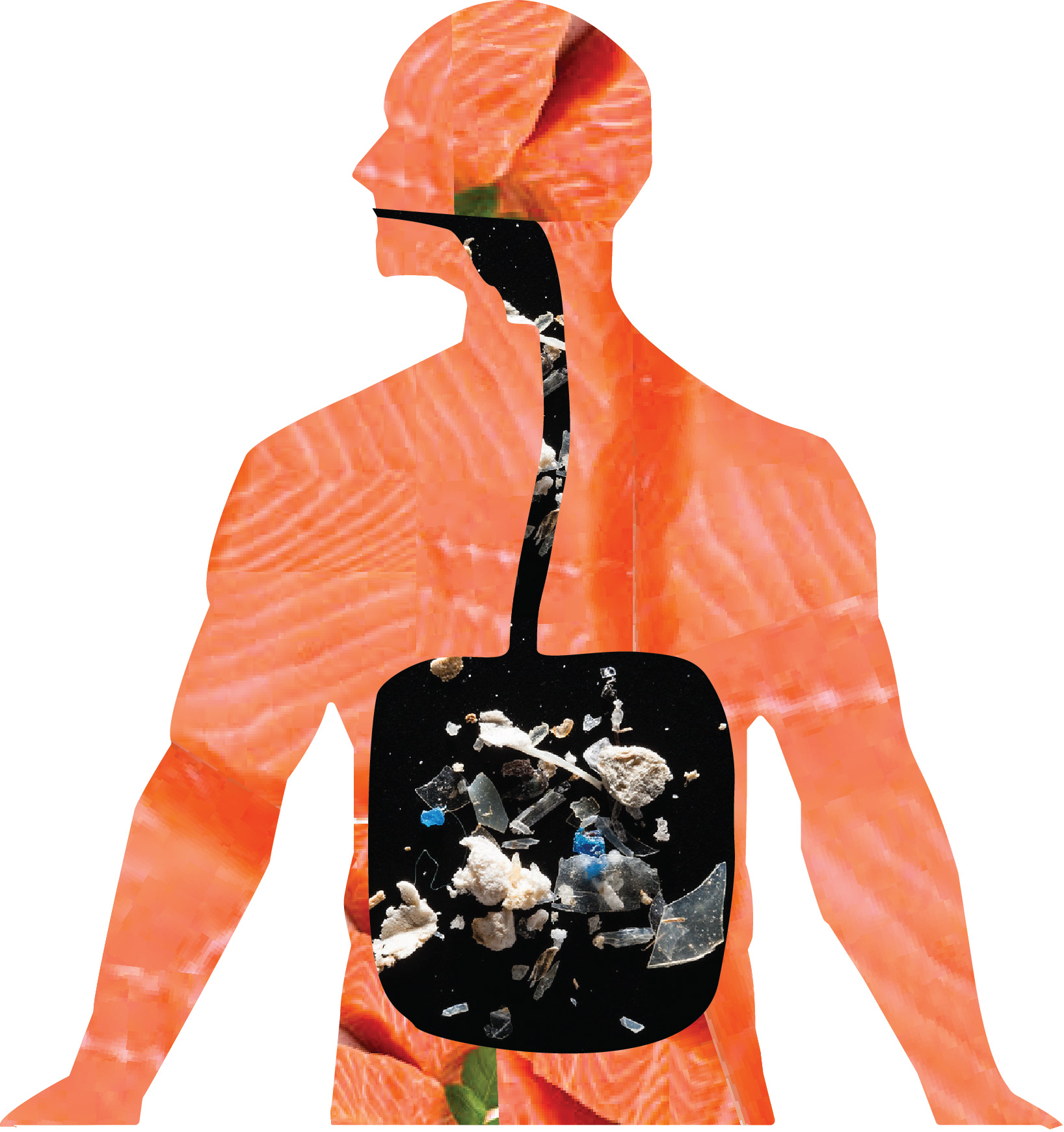
PROFILE/DESCRIPTIONMicroplastics In Our Fish
The Minamata Bay disease characterizes long-term impairment of the central nervous system from methylmercury poisoning. Although government organizations worldwide have since limited the mercury that enters surface waters, this toxin has a new and powerful avenue to the human brain: marine plastic pollution. Methylmercury journeys up the food chain from phytoplankton and zooplankton to fish and humans. Dr. Katlin Bowman, a research scientist at the University of California, Santa Cruz, explains that heavy metal toxins naturally adhere to plastics in the water, creating extremely concentrated “fish food bombs” of mercury. “Plastic has a negative charge and mercury has a positive charge. Opposites attract so the mercury sticks,” Dr. Bowman said. According to Abigail Barrows, a marine research scientist from the College of the Atlantic, microplastics are even more concentrated in methylmercury as a result of their greater ratio of surface area to volume, trapping toxic particles in the many folds and tight spaces. Less than five millimeters in size, microplastics range from microbeads in personal care products to microfibers from clothing. “If microplastics increase the rate of methylmercury production, then microplastics in the environment could indirectly be increasing the amount of mercury that accumulates in fish,” Dr. Bowman said.